How Much Does AC Repair Cost: A Comprehensive Guide
Exploring the costs associated with AC repair services opens the door to a world of insights and considerations. From factors influencing pricing to average cost ranges for common repairs, this topic delves into the nuances of AC maintenance with a focus on clarity and depth.
As we navigate through the intricacies of AC repair costs, a clearer picture emerges of the financial aspects involved in ensuring your cooling system functions optimally.

When it comes to the cost of AC repair services, several factors can influence how much you might have to pay. Understanding these factors can help you anticipate the potential costs and make informed decisions about your AC unit.The size and type of the AC unit can have a significant impact on repair costs.
Larger units or those with more advanced features may require specialized parts or more labor-intensive repairs, which can drive up the overall cost of the service.The extent of the damage or the complexity of the repair can also affect pricing.
Minor issues like a clogged filter or a simple refrigerant recharge may be relatively inexpensive to fix. However, more serious problems such as a faulty compressor or a refrigerant leak can be more costly to repair due to the need for specialized parts and labor.

When it comes to AC repairs, the costs can vary depending on the type of issue and the service provider. It’s essential to understand the average cost range for common AC repairs to budget accordingly and avoid any surprises.Typically, the average cost range for AC repairs can be broken down into specific issues that may arise with your unit.
Here are some examples of typical repair costs for common AC problems:
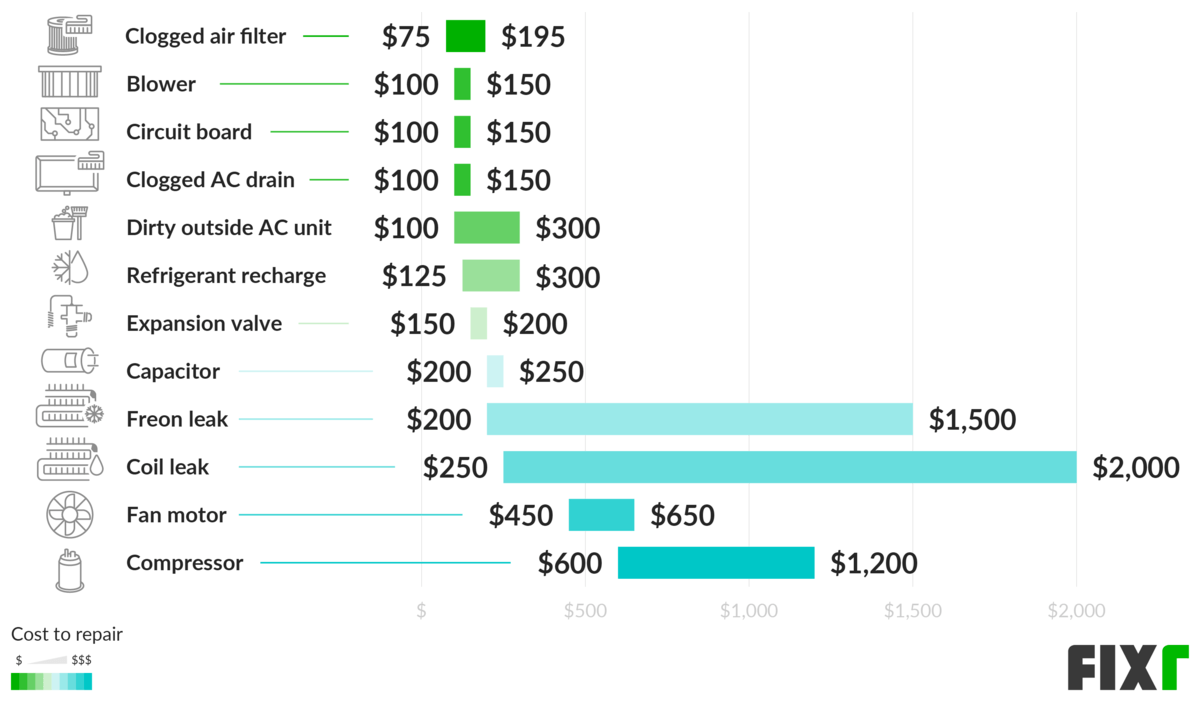
Refrigerant leaks are a common issue with air conditioners and can lead to reduced cooling efficiency. The average cost to repair a refrigerant leak can range from $200 to $1,500, depending on the severity of the leak and the amount of refrigerant needed.
Compressor failures are more serious and can be costly to repair. On average, repairing a compressor can range from $1,500 to $2,500, including parts and labor. However, in some cases, a total compressor replacement may be necessary, which can increase the cost.
Thermostat issues can cause your AC unit to malfunction or not cool properly. Repairing or replacing a thermostat can cost anywhere from $100 to $300, depending on the type of thermostat and the complexity of the installation.It’s important to note that pricing differences for AC repairs can also be influenced by geographical location and the service provider.
In areas with a higher cost of living, such as big cities or affluent neighborhoods, you may find that AC repair costs are higher compared to rural areas or less affluent communities. Additionally, certain service providers may charge more for their expertise or brand reputation, so it’s crucial to research and compare quotes before committing to any repairs.
When it comes to AC repairs, there are additional costs that may arise beyond just the basic repair work. These extra expenses can impact the overall cost of getting your AC unit up and running again.: Additional costs can include service fees charged by the HVAC company for diagnosing the issue or for sending a technician to your home.
In some cases, replacement parts may be needed to fix the problem, which can add to the total cost. Emergency repair services or after-hours repairs may also incur higher charges due to the immediate assistance provided outside regular working hours.
It’s important to be aware of these potential extra costs to avoid any surprises when the bill arrives.
When it comes to AC repairs, homeowners often find themselves debating whether to tackle the repairs themselves or hire a professional technician. Let’s explore the costs associated with each option and when it’s best to choose one over the other.
When to DIY and When to Hire a Professional
- Simple maintenance tasks like changing the air filter or cleaning the AC unit can often be done by homeowners without the need for professional help.
- For more complex issues like refrigerant leaks, electrical problems, or compressor failures, it’s best to hire a professional technician. Attempting to fix these issues without the necessary expertise can lead to further damage and higher repair costs.
Risks of DIY Repairs
- Botched DIY repair attempts can result in more extensive damage to your AC unit, leading to costly repairs or even the need for a full replacement.
- Incorrectly handling electrical components or refrigerant can pose safety risks to homeowners and may result in additional expenses to rectify the damage.